Artifacts, not transcripts
The whole point of the AI isn't to talk back. It's to turn talk into things you can browse. Here's how we think about that.

Pango
April 27, 2026·2 min read
An AI chat that gives you a great answer and then forgets it isn't a planning tool. It's a search bar with better manners. Useful, sometimes; durable, never. If the only output of an hour of talking about a renovation is a chat transcript, you've done the work twice — once in the chat, once when you have to extract anything actionable out of it.
The thing we kept coming back to was: the AI shouldn't be the centerpiece. The structured outputs should. The artifacts.
Inside a Space, there's a budget. The budget is live. When the group decides on the quartz, the budget line for countertops updates, with the new number, with what it replaced, and with whether you're still under cap. When someone forwards a quote PDF, it doesn't disappear into a thread — it becomes a line. When the cabinet vendor's quote comes in over what was assumed, the budget flags it and the AI nudges the group: "this puts us $3,400 over — do we move on this, or take a beat?"
The schedule works the same way. It's not a fixed Gantt; it's a living thing that knows what blocks what. Push the tile install a week and the install of the appliance that depends on it shifts with it. The schedule isn't a static document. It's a model of the plan.
The decision log isn't a meeting-minutes dump. It's a list of "we chose X over Y, here's who signed off, here's why." Six weeks later when somebody asks "wait, why did we go with this faucet again?" — it answers.
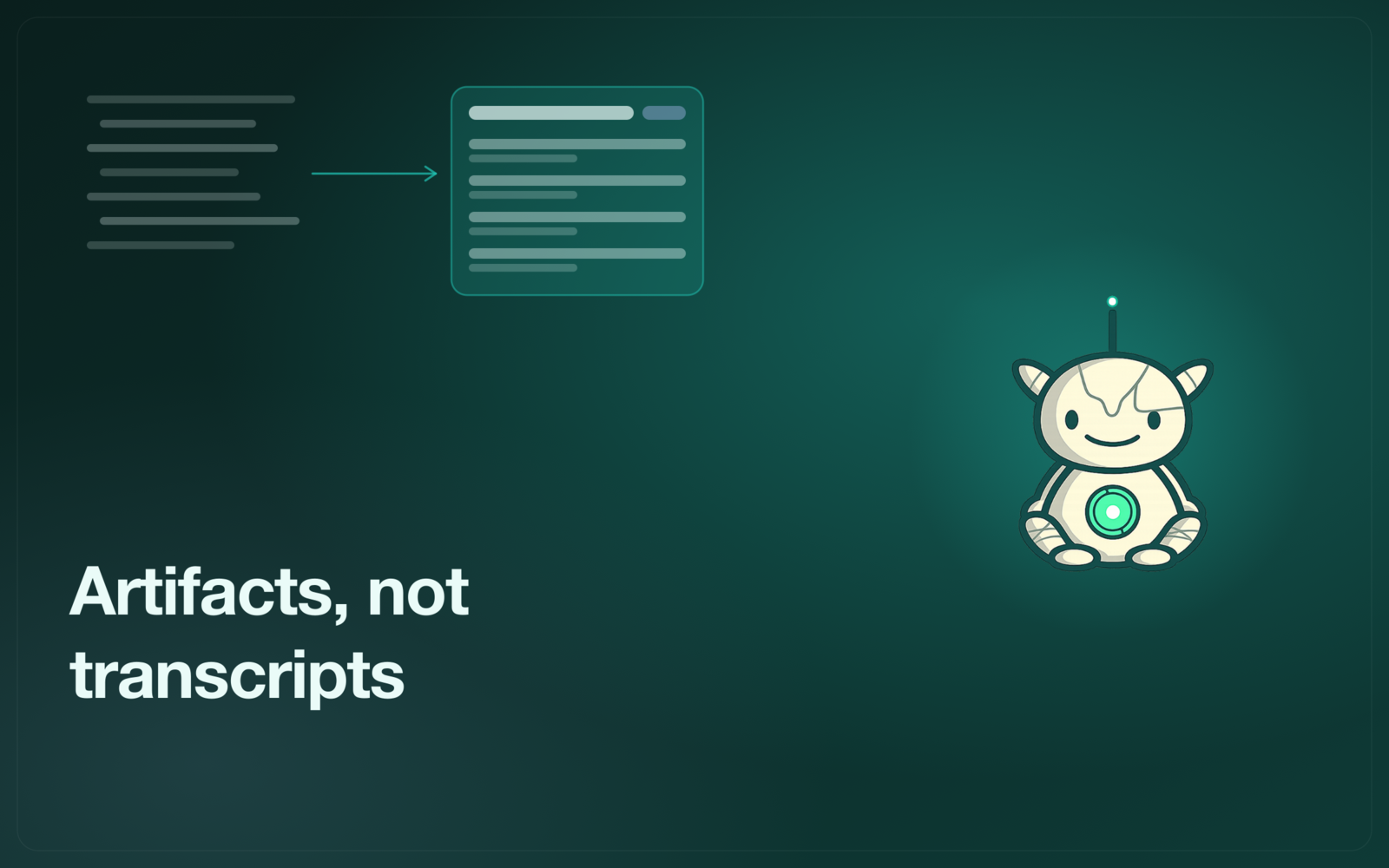
This is what we mean when we say artifacts, not transcripts. The AI's job isn't to be smart at you. It's to extract structure from the messy back-and-forth and keep it current. The thinking stays in the chat where it's natural. The result lives in artifacts where it can be browsed, updated, and trusted.
It's a different default. Most AI products are optimized for the conversation. We're optimized for what's left after the conversation ends.